Tehran FIR on High Alert: Sustained Military Air Activity and Civilian Overflight Risk in Iranian Airspace
Multiple military aircraft from several nations have been detected transiting Tehran FIR in recent days, coinciding with an active Iran-Israel armed conflict indicator. Operators with routes through Iranian airspace should reassess exposure urgently.
On this page · 10
- The Current Picture
- What the ADS-B Data Shows
- Why This Matters for Commercial Operators
- The Broader Middle East Overflight Environment
- Operational Guidance
- Key Takeaways
- Frequently asked questions
- Is it safe to fly over Iran right now?
- What military activity has been detected in Tehran FIR?
- What should operators do before transiting Iranian airspace?
The Current Picture
In the past seven days, intelligence feeds and open-source ADS-B monitoring have flagged a notable and sustained concentration of military aircraft activity inside Tehran FIR (OIIX) — at a time when active armed conflict indicators involving Iran and Israel remain live. For operators routing through or adjacent to Iranian airspace, this convergence of signals represents one of the more significant overflight risk environments currently being tracked.
The armed conflict signal for Iran (OIIX FIR) references inter-state tensions between Iran and Israel, corroborated across multiple GDELT conflict event markers. Combined with the volume of military transit detections, this is not a background noise situation — it reflects a live operational environment.
What the ADS-B Data Shows
Across multiple polling windows over the past week, the following military or government-registered aircraft were detected inside OIIX:
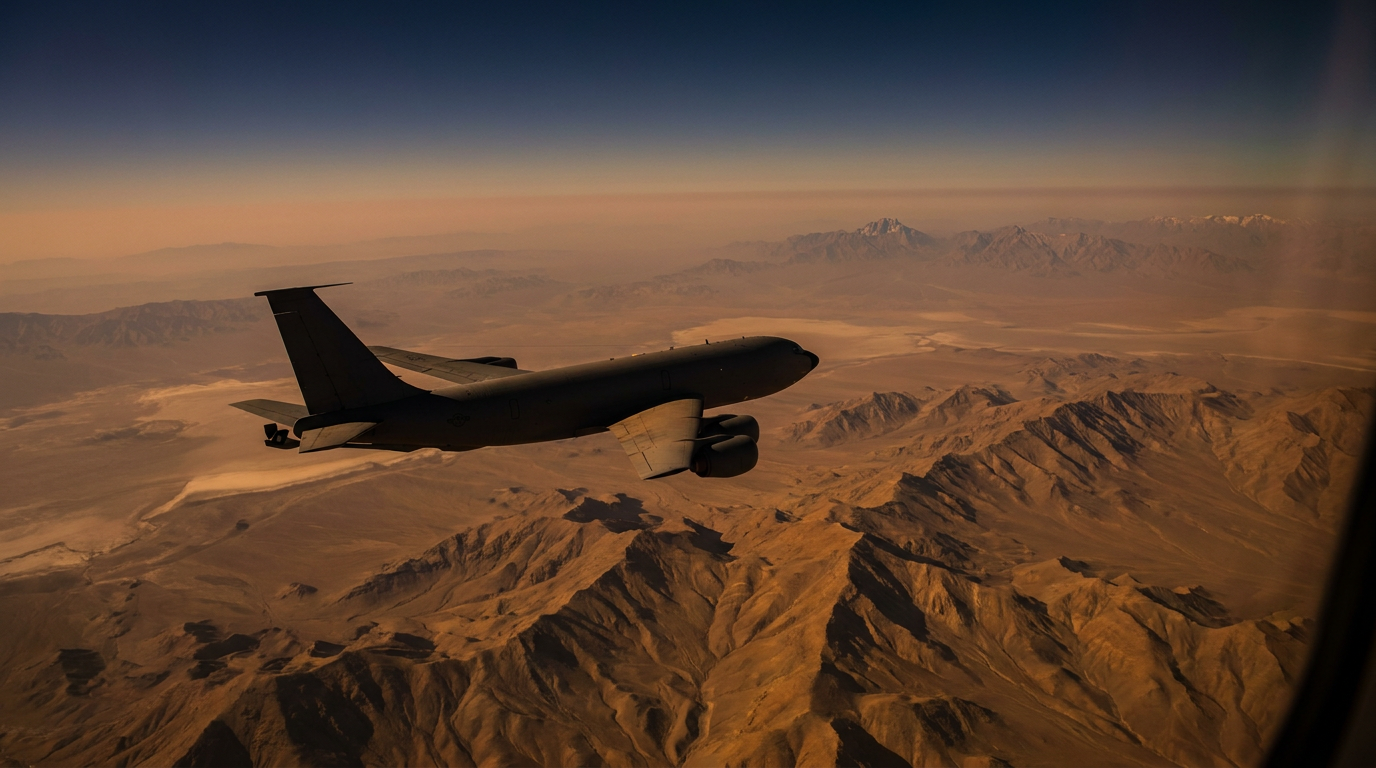
- Two KC-135R Stratotanker aircraft (registrations 59-1507 and 58-0122, no callsigns filed) — the presence of aerial refuelling platforms in or near a contested FIR is a strong operational indicator of sustained strike or surveillance activity in the broader region.
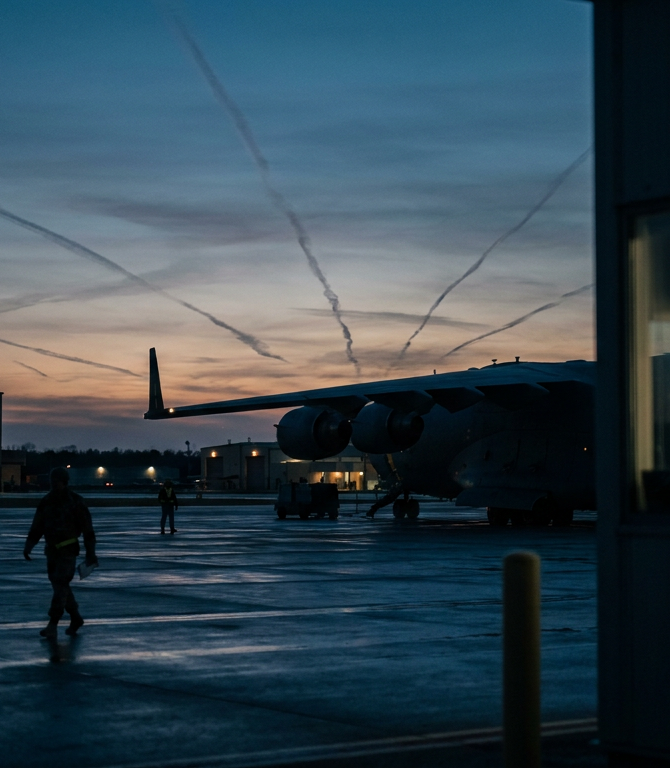
- Two USAF Boeing C-17 / B-762 aircraft (registrations 16-46016 and 20-46080, callsigns FLYER58 and FLYER51) — heavy airlift platforms with military callsigns transiting the FIR on multiple separate occasions.
- An Iranian Air Force AgustaWestland AW139 helicopter (DU-203) detected inside OIIX.
- A Qatari Air Force Airbus A320 (A7-HWL, callsign QAF9) transiting Tehran FIR — suggesting continued regional state-to-state air movement.
- Iranian military C-130 (502, callsign MJN238) detected twice across separate polling windows, indicating recurrent domestic military airlift activity.
- A Qatari government PC-21 (QA362) and a Bahraini government Gulfstream GA6C (A9C-BRN, callsign BAH17) also detected inside OIIX, pointing to continued diplomatic and state aviation activity alongside military movements.
This is an unusually dense cluster of military and state aircraft detections for a single FIR over a short observation window, and it warrants serious attention from commercial operators.
Why This Matters for Commercial Operators
The Iran-Israel tension axis has periodically generated acute risk to civil aviation — most dramatically illustrated by historical incidents of missile activity affecting civil airspace. The current evidence does not indicate an imminent strike or interception of civil traffic, but the conditions that elevate risk are present:
- Active armed conflict indicators are confirmed at the Iran-Israel level, with corroborating signals across multiple data sources.
- Multiple foreign military aircraft — including USAF tanker and airlift assets — are transiting OIIX, implying ongoing military operations in the broader region that may not be fully notified through standard NOTAM channels.
- State aviation from Gulf neighbours (Qatar, Bahrain) is still moving through the FIR, indicating that complete closure has not occurred — but the operational picture remains dynamic.
- Airspace management risk: In a contested environment, military aircraft may be operating under radio silence or without ATC coordination, increasing the potential for confliction with commercial traffic.
Operators should also note that in previous Iran-Israel escalation cycles, Iranian authorities have issued airspace restrictions with limited lead time, and that GNSS interference in the broader Middle East region — already well-documented — could compound navigation risk for crews transiting OIIX.
The Broader Middle East Overflight Environment
The Tehran FIR situation does not exist in isolation. Across the same observation window:
- Israel/Palestine airspace (LLLL FIR) carries active armed conflict indicators involving Iran, Israel, Lebanon, and the United States — with military force, small-arms fire, and artillery cited as drivers.
- Lebanon (OLBB FIR) shows active armed conflict indicators involving Israel and Lebanon, with artillery and armour cited.
- Damascus FIR (OSTT) is showing traffic volumes running 68–88% below rolling baselines across multiple polling windows, consistent with systematic overflight avoidance by commercial operators — a market signal that flight planning tools and operational risk teams are already reflecting elevated concern.
- Military aircraft in Damascus FIR include Syrian PC-21 trainers and an AT-802 (a turboprop with dual-use military applications), alongside a Cessna 208 operated under a military callsign (SHAHD296).
The combined picture across OIIX, LLLL, OLBB, and OSTT is of a Middle East airspace environment under sustained military pressure from multiple vectors.
Operational Guidance
For airline, corporate aviation, and charter operators currently routing through or near Iranian airspace, the following considerations apply:
- Route review: Consider whether OIIX transits are operationally necessary in the current environment. Diversion routing via Turkey or the Arabian Peninsula may add fuel cost but substantially reduces exposure.
- NOTAMs and AIC monitoring: Ensure planning teams are actively monitoring NOTAMs for OIIX, LLLL, and OLBB on a same-day basis. Airspace status can change within hours during active conflict cycles.
- Fuel planning: Build contingency fuel for potential rerouting at short notice if an OIIX closure or restriction is issued post-departure.
- Crew briefings: Crews operating in or near the Tehran, Baghdad, and Damascus FIRs should be briefed on current military activity indicators and the potential for non-standard ATC environments.
- Insurance review: Operators with hull war risk coverage should verify that Iranian airspace transits are within policy scope given current advisories. Some underwriters have begun flagging OIIX in recent weeks.
- Information sharing: Coordinate with your home-state aviation authority and consult ICAO Conflict Zone Information Repository (CZIR) for current formal advisories.
Key Takeaways
- Active armed conflict indicators between Iran and Israel are live within Tehran FIR (OIIX), corroborated by multiple sources.
- At least eight distinct military or state aircraft detections — including USAF tankers and heavy airlift — have been logged inside OIIX in the past seven days.
- Damascus FIR (OSTT) commercial traffic is running 68–88% below baseline, reflecting widespread voluntary overflight avoidance.
- The broader Middle East arc — OIIX, LLLL, OLBB, OSTT — represents a contiguous zone of elevated overflight risk.
- Operators should review routing, fuel planning, and insurance coverage for any flights transiting this region, and monitor NOTAMs on a same-day basis.
- The presence of aerial refuelling assets inside OIIX is a specific operational indicator that sustained military activity at range is ongoing.
Frequently asked questions
Is it safe to fly over Iran right now?
Tehran FIR (OIIX) currently carries active Iran-Israel armed-conflict indicators corroborated across multiple sources, alongside a dense cluster of military aircraft detections. Operators should reassess whether OIIX transits are operationally necessary and consult the live flight risk feed for current status.
What military activity has been detected in Tehran FIR?
Over the past seven days, ADS-B monitoring logged at least eight distinct military or state aircraft inside OIIX, including USAF KC-135R tankers and C-17 airlifters. The presence of aerial-refuelling assets is a specific indicator of sustained military activity at range.
What should operators do before transiting Iranian airspace?
Operators should review routing and contingency fuel, monitor NOTAMs for OIIX, LLLL and OLBB on a same-day basis, brief crews on non-standard ATC conditions, and verify that hull war-risk insurance covers Iranian airspace transits.
The AeroVigil Airspace Risk Desk publishes analysis under AeroVigil's editorial standard: every hard claim is attributed to a named source or AeroVigil's own data pipeline, and no statistics are invented. Volatile country-level risk is not frozen into this article — consult the live flight risk feed for current status.