Conflict-Zone Overflight Risk for Business Aviation
Conflict-zone overflight risk is sharper for business aviation than for scheduled airlines: a charter or corporate flight department routes a single tail across many FIRs on short notice. The same bulletin a network carrier absorbs with a standing reroute can strand a bizjet trip the night before departure.
On this page · 6
- What is overflight risk in business aviation?
- Why is conflict-zone overflight a bigger problem for charter and corporate flight departments?
- What sources define conflict-zone airspace risk?
- How should a flight department assess overflight risk before a trip?
- How does AeroVigil support overflight decisions for business aviation?
- Frequently asked questions
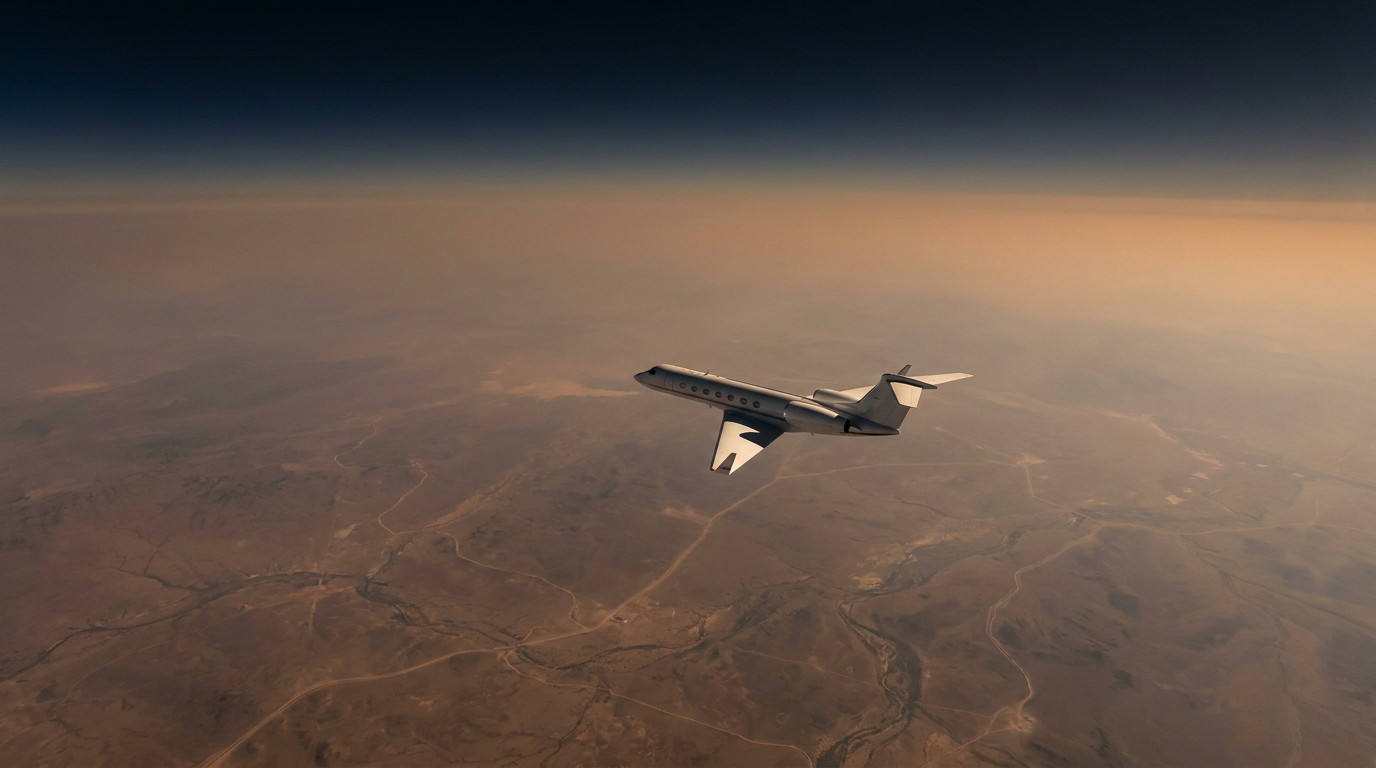
Conflict-zone overflight risk is a sharper problem for business aviation than for scheduled airlines, because a charter or corporate flight department routes a single tail to unfamiliar destinations on short notice — often across a dozen flight information regions and a fresh set of overflight permits each week. The same conflict-zone bulletin that a network carrier absorbs with a standing reroute can strand a bizjet trip the night before departure. This guide explains how overflight risk works for business aviation, and how a flight department turns scattered advisories into a defensible go/no-go decision.
What is overflight risk in business aviation?
Overflight risk is the danger to an aircraft transiting the airspace above a conflict zone or contested region, rather than departing from or landing in it. The threat is not the destination — it is the en-route airspace the flight crosses at altitude.
For business aviation the exposure is concentrated. A scheduled carrier flies the same city pairs on repeatable airways, so its overflight decisions are made once and reused. A charter operator plans a new routing for almost every trip, frequently through regions the flight department has never operated before.
That difference matters because conflict-zone risk changes faster than trip planning cycles. A single tail on a short-notice request can be committed to a routing before the crew has seen the current airspace picture for every FIR on the flight-planned track.
Why is conflict-zone overflight a bigger problem for charter and corporate flight departments?
Three structural features of business aviation raise the stakes.
First, routings are bespoke. Business jets fly point-to-point on demand, so each trip can cross FIRs that the department does not monitor continuously.
Second, lead times are short. A trip confirmed to a principal in the evening for a morning departure leaves little room to research overflight permits, contested airspace and prohibited areas across the whole track.
Third, single-tail exposure is total. A network carrier can cancel one rotation; a flight department that mis-routes its only tail on a trip has no fallback, and the risk sits with a named principal on board.
What sources define conflict-zone airspace risk?
Overflight risk assessment draws on official airspace authorities, not news headlines. The primary sources are consistent across operators.
The EASA Conflict Zone Information Bulletins publish risk information and recommendations for specific conflict-zone airspace affecting EU operators. The FAA issues NOTAMs, Special Federal Aviation Regulations and Advisory Circulars prohibiting or restricting US operators in defined regions. The UK CAA and other state authorities issue equivalent conflict-zone advice for their operators.
Underneath those, each state's Aeronautical Information Publication and active NOTAMs define prohibited, restricted and danger areas within its FIR. Per ICAO Annex 11, the state responsible for an FIR controls the airspace regardless of the aircraft's operator or registration.
No single one of these sources is complete on its own. A defensible assessment reconciles the operator's national conflict-zone advice with the overflown state's own AIP and NOTAMs, and treats any single unverified report as a lead to check, not a decision.
How should a flight department assess overflight risk before a trip?
The workflow is the same discipline a network carrier uses, compressed into a per-trip cycle.
- Resolve the routing to FIRs. Translate the flight-planned track into the specific flight information regions and countries it crosses, including step-climbs and likely reroutes.
- Pull current advisories per FIR. For each region, check the operator's national conflict-zone bulletin, the overflown state's NOTAMs, and any prohibited or restricted areas on the track.
- Grade the sources. Weight official airspace authorities above secondary reporting, and record which source drove each finding so the decision is auditable.
- Make and document the go/no-go call. Record the routing, the advisories considered, the alternative track if one is required, and the approver — a trail that survives an insurer or regulator asking why the trip flew that line.
The output is not "avoid the region" or "ignore it." It is a documented decision, tied to a specific tail and trip, that a reviewer can defend after the fact.
How does AeroVigil support overflight decisions for business aviation?
AeroVigil collapses the scattered airspace picture into one pre-flight brief scoped to the tails a flight department is operating. Conflict-zone bulletins, state NOTAMs and OSINT signals are normalized, tagged by reliability tier and matched against the flight-planned routing, so the FIRs that carry restrictions surface with the source advisory attached.
The pre-flight threat assessment workflow adds a preparer, reviewer and approver, an audit trail and a PDF for the trip file — built for short-notice charter routings, not only scheduled networks. See the business aviation sector overview for how the map, alerts and trip-level assessment fit a flight department's week, and the methodology for how sources are graded.
Overflight risk is one facet of the broader conflict-zone airspace picture; the complete guide to conflict-zone and overflight risk covers the underlying framework in depth.
Frequently asked questions
Does overflight risk apply if a business jet never lands in the conflict zone? Yes. Overflight risk is the threat to an aircraft transiting the airspace above a region at altitude, independent of whether it departs from or lands there. A flight can carry material overflight risk while both its origin and destination are entirely unaffected.
Who is responsible for the airspace a business jet overflies? Per ICAO Annex 11, the state responsible for a flight information region controls that airspace and issues the NOTAMs and restrictions within it, regardless of the aircraft's operator or country of registration. A flight department must reconcile its own national conflict-zone advice with the overflown state's rules.
How is overflight risk assessment different for charter versus scheduled airlines? Scheduled airlines make overflight decisions once for repeated city pairs; charter and corporate flight departments plan a new routing for nearly every trip, often on short notice and through unfamiliar FIRs. The assessment discipline is the same, but business aviation runs it per trip rather than per network.
What official sources should a flight department check for conflict-zone overflight risk? Start with the operator's national conflict-zone advice — EASA Conflict Zone Information Bulletins for EU operators, FAA NOTAMs and prohibitions for US operators, and the equivalent from the state of registry. Then check each overflown state's AIP and active NOTAMs for prohibited, restricted and danger areas on the track.
Can a single OSINT report justify avoiding an FIR? No. A single unverified report is a lead to check against official airspace sources, not a decision on its own. A defensible go/no-go call grades sources and records which one drove the outcome.