Military Aircraft Activity Surge in Ukraine Airspace Despite Ongoing Conflict Risk
ADS-B surveillance has detected multiple military transport and logistics aircraft inside Ukraine's Kyiv FIR, confirming the airspace remains operationally active and contested. Civil overflight is not viable for standard commercial operations without government coordination, dedicated corridor approval, and…
On this page · 9
- Overview
- Context: Contested Airspace and Civil Aviation Exposure
- Operational Implications
- What to Watch
- Key Takeaways
- Frequently asked questions
- Can commercial aircraft fly over the Kyiv FIR?
- What are the main risks of transiting Ukrainian airspace?
- What navigation precautions apply near contested Ukrainian airspace?
Overview
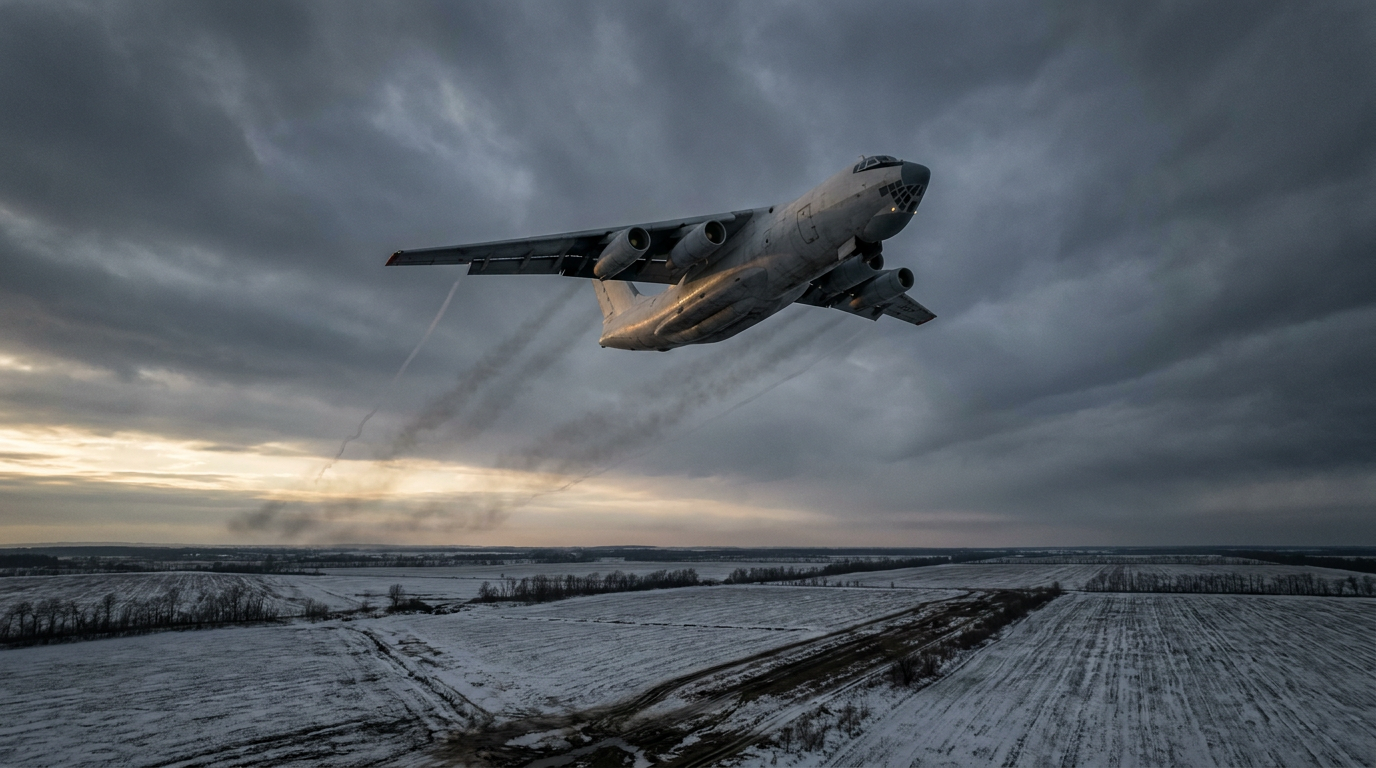
Over the past seven days, multiple military aircraft have been detected operating within Ukraine's Kyiv Flight Information Region (UKBV), underscoring the continued viability and risk profile of transiting contested airspace over the conflict zone. ADS-B surveillance data placed at least three military-registered aircraft inside this FIR during recent polling windows, including a Gulfstream IV (GLF4, reg 102003, callsign SVF680), a Boeing 737-800 freighter variant (B738, reg 0111, callsign PLF120), and an Ilyushin IL-76 cargo aircraft (IL76, reg 7T-WIC). These detections, while indicative of authorized military operations, illustrate the complex airspace environment that operators and aviation risk managers must navigate when assessing Ukraine overflight feasibility.
Context: Contested Airspace and Civil Aviation Exposure
Ukraine's Kyiv FIR remains subject to active military operations, air-defense deployments, and dynamic NOTAM activity. The presence of military aircraft—particularly transport and logistics platforms like the IL-76—suggests sustained supply and personnel movement in support of conflict operations. While these aircraft are registered and their operations may be coordinated, their activity creates secondary risk for any civil traffic that might attempt to route through the region.
The detection of military variants (such as a cargo-configured B738) alongside strategic airlift assets indicates that military operations in the FIR are not purely tactical but include logistical support functions. This operational tempo directly influences:
- Airspace segregation and NOTAM complexity: Military activity drives frequent NOTAM issuance, which may restrict or prohibit civilian overflight on short notice.
- Electronic warfare and navigation hazards: Military operations in contested airspace increase the probability of incidental GNSS interference, radar jamming, or other electronic warfare effects that could degrade navigation and communication reliability.
- Collision risk: The mixture of military and potential civilian traffic in the same FIR creates separation and traffic management challenges, particularly if civilian IFR plans are approved.
Operational Implications
For operators and risk managers, the continued military aircraft activity in UKBV signals that:
- Airspace is not completely closed to aviation, but access is highly conditional. Flights remain possible via military coordination or international agreement (e.g., humanitarian corridors), but civilian commercial overflight remains exceptionally rare.
- NOTAMs and airspace advisories are dynamic and frequent. Operators must maintain active monitoring of Ukraine-region issuances and be prepared for last-minute route changes.
- Electronic navigation resilience is critical. The presence of military systems in contested airspace elevates the risk of GNSS interference. Aircraft should carry independent navigation capability (INS, ground-based navaids) and verify GPS integrity against alternative sources.
- Coordination overhead is high. Any planned overflight would require military liaison, government-to-government approval, and adherence to strict corridors or time windows.
What to Watch
- Frequency and composition of military aircraft transits: An increase in heavy-lift or transport operations may signal changes in logistics needs or military posture, which could foreshadow changes in airspace availability.
- NOTAM volatility: Spikes in temporary flight restrictions (TFRs) or airspace closure NOTAMs in UKBV should trigger reassessment of any planned operations.
- Coordination windows: Government and military liaisons may publish or communicate windows for humanitarian or strategic overflight. Operators should remain engaged with brokers, government channels, and ICAO regional updates.
Key Takeaways
- Military aircraft operations in Ukraine's Kyiv FIR continue at measurable levels, confirming the airspace remains contested and operationally active.
- Civilian overflight of UKBV is not feasible for standard commercial operations and remains restricted to specially coordinated missions.
- Risk managers should assume high NOTAM churn, potential GNSS interference, and dynamic restrictions when assessing or planning any Ukraine region operations.
- Alternative routing, fuel planning, and government coordination are non-negotiable for any proposed transits; standard civil approval processes do not apply.
Frequently asked questions
Can commercial aircraft fly over the Kyiv FIR?
Civilian commercial overflight of the Kyiv FIR (UKBV) is not feasible for standard operations and remains restricted to specially coordinated missions such as humanitarian or government flights. The military and state aircraft detected there are not commercial traffic.
What are the main risks of transiting Ukrainian airspace?
The principal hazards are frequent short-notice NOTAM restrictions, potential GNSS interference from military electronic-warfare activity, and separation risk from mixed military traffic.
What navigation precautions apply near contested Ukrainian airspace?
Aircraft should carry independent navigation capability, such as inertial systems and ground-based navaids, and verify GPS integrity against alternative sources, because military operations elevate the risk of GNSS interference.