Cairo FIR Military Activity and Suez Region Risk: Implications for North Africa and Red Sea Overflight
Active military operations confirmed inside Egypt's Cairo FIR—including surveillance aircraft and air-defense readiness—raise the operational risk profile for carriers transiting Red Sea, Suez, and Mediterranean corridors.
On this page · 13
- Overview
- Context: Egypt's Strategic Position and Military Operations
- Linkage to Broader Regional Risk
- Red Sea Missile and Drone Threats
- Sinai and Regional Militant Activity
- Overflight and Routing Impact
- Operational Risk Factors
- What to Watch
- Key Takeaways
- Frequently asked questions
- Is it safe to overfly the Cairo FIR?
- How does Red Sea military activity affect commercial aviation?
- What should operators do when planning routes through Egyptian airspace?
Overview
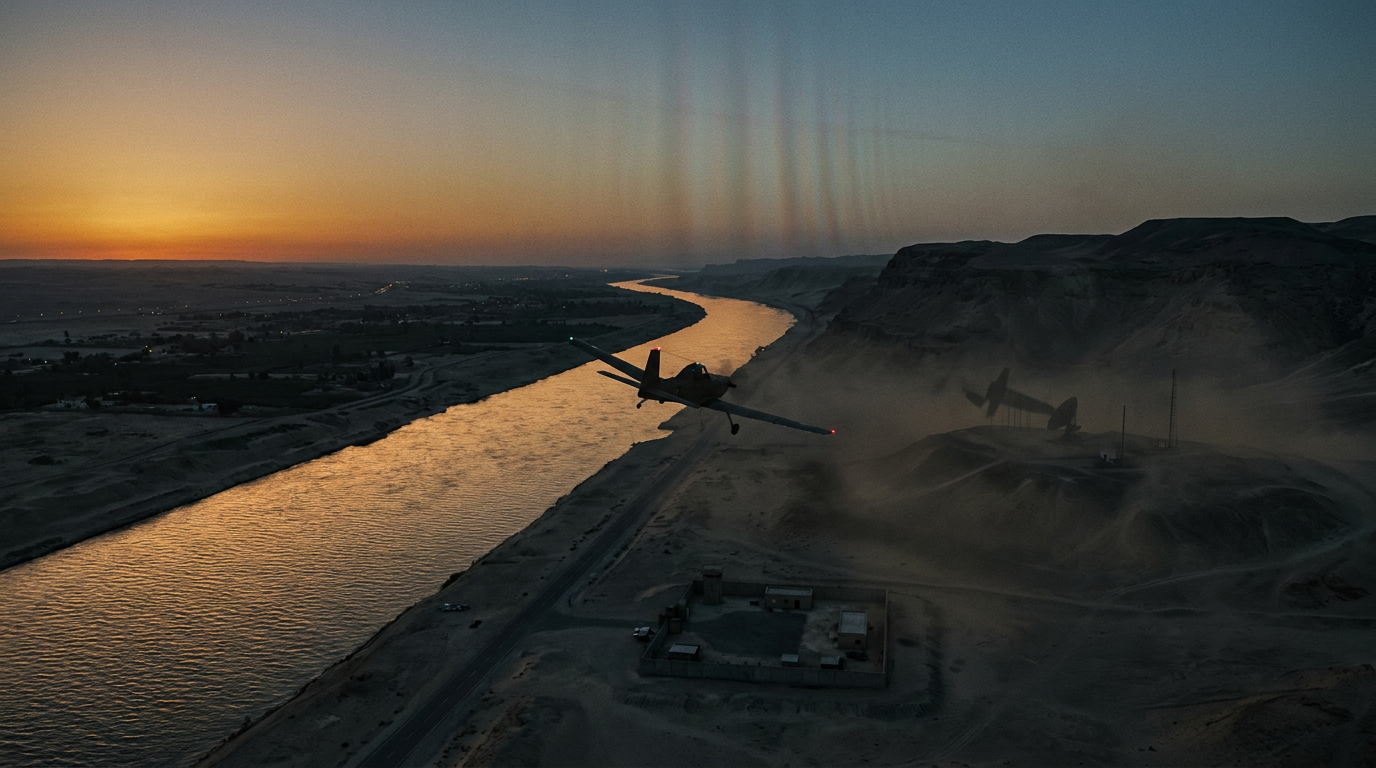
Recent ADS-B tracking has placed at least two military aircraft inside Egypt's Cairo Flight Information Region (HECC) over the past week: a Beechcraft 20 (BE20, reg 95-00101, callsign MFO692) and a Cessna 208 (C208, reg 1541, callsign SHAHD281). These detections, combined with reported air-defense activity in adjacent regions and ongoing geopolitical tensions in the Red Sea and Eastern Mediterranean, signal a military operational environment that operators must factor into risk assessments for overflight and transit through North Africa.
Context: Egypt's Strategic Position and Military Operations
Egypt's Cairo FIR covers a vast swath of North Africa and adjoins the Red Sea, the Suez Canal approach, and routes to the Eastern Mediterranean. The Suez Canal remains one of global aviation's critical indirect dependencies—closure or severe restriction of maritime traffic creates ripple effects on fuel surcharges, scheduling, and insurance. Egypt's military operates extensively throughout the FIR to:
- Monitor and secure Suez Canal traffic and approaches.
- Counter militant activity in the Sinai Peninsula and Red Sea region.
- Coordinate with regional partners on air-defense and maritime security.
The aircraft detected—a Beechcraft 20 (a light twin-engine aircraft often used for liaison, training, or light-duty reconnaissance) and a Cessna 208 (single-engine utility aircraft commonly used for transport and patrol)—are consistent with Egyptian military support operations rather than major combat assets. However, their presence confirms active military operations and surveillance within the FIR.
Linkage to Broader Regional Risk
Red Sea Missile and Drone Threats
Recent reports of air-defense interceptions of missiles and drones in the Gulf (e.g., Kuwait air defenses engaging hostile attack) reflect the broader proliferation of unmanned and cruise-missile systems across the Middle East and Red Sea region. While not directly targeting commercial aviation, these systems create:
- Stray ordnance risk: Missiles intended for other targets or launched in error could transit commercial flight corridors.
- Electronic warfare interference: Active air-defense and counter-UAS systems in the region generate radio-frequency emissions that may degrade or spoof navigation systems (GNSS, DME, VOR).
- ATC communication congestion: Military air-defense net activity can overwhelm or interfere with civil ATC frequency management, creating communication delays or missed traffic advisories.
Sinai and Regional Militant Activity
Egypt's Sinai Peninsula remains a focus of military counter-insurgency operations. While these are geographically distant from major commercial flight corridors, they underscore Egypt's operational posture and the necessity for active air-defense readiness. This readiness, while necessary, increases the probability of airspace turbulence, restricted areas, and NOTAM activity that operators must track.
Overflight and Routing Impact
Primary Red Sea Corridor: Aircraft transiting between Europe, Asia, and East Africa via the Red Sea and Bab al-Mandab Strait are geographically close to Egyptian airspace and air-defense zones. Operators on these routes must:
- Monitor NOTAMs for temporary flight restrictions (TFRs) in HECC or adjacent Egyptian airspace.
- Maintain real-time ATC coordination to avoid incidental conflict with military traffic.
- Plan fuel and alternate routing to account for potential airspace reroutes or holding patterns if military operations intensify.
Suez Approach Routes: Aircraft planning to overfly the Suez Canal region or land in Egypt (Cairo International, Hurghada, Sharm el-Sheikh) must be aware that military activity may create approach delays or vectoring requirements.
Mediterranean Overflight to/from Europe: Routes transiting Egyptian airspace toward Mediterranean airports face similar risks; military activity in HECC can cascade into constraints on European-bound traffic.
Operational Risk Factors
- NOTAM Volatility: Military operations in HECC are likely to drive frequent, short-notice NOTAMs for restricted areas, altitude restrictions, and temporary closures. Operators should assume that standard-filed flight plans may require amendment.
- Air-Defense Misidentification Risk: While Egypt operates modern air-defense systems (Tor, Patriot, and other platforms), the presence of active military surveillance and weapons systems near commercial routes creates the possibility—however remote—of misidentification in high-tempo scenarios.
- GNSS and Radio Frequency Interference: Military radar, electronic warfare, and counter-UAS systems operating in HECC may inadvertently or intentionally degrade GNSS signal quality or transmit RF emissions that interfere with civilian navigation or communication. Recent NOTAM activity at major U.S. airports (e.g., Los Angeles, JFK) indicates that GPS outages and NOTAMs related to GPS interference are an active operational concern.
- ATC Coordination Delays: Egyptian ATC infrastructure in conflict-adjacent regions may be strained; operators should plan for potential communication delays or incomplete traffic awareness.
What to Watch
- Suez Canal incidents or closures: Any disruption to maritime traffic through Suez (due to conflict spillover, accidents, or military action) may prompt rapid changes to Egyptian airspace policy or restrictions.
- Escalation in Red Sea/Gulf military activity: Further reported interceptions of missiles or drones would signal heightened air-defense posture and increase risk of operational constraints or misidentification.
- NOTAM issuance trends in HECC: An uptick in NOTAMs related to military exercises, restricted areas, or temporary closures would indicate intensifying operations and reduced airspace availability.
- Incident reports involving military/civil aircraft proximity: Any reported near-miss or close call between military and commercial traffic should trigger broader risk reassessment.
Key Takeaways
- Military aircraft operations in Egypt's Cairo FIR confirm active military operational posture, including surveillance and air-defense readiness.
- Red Sea and Mediterranean overflight routes transiting Egyptian airspace face elevated risk of NOTAM activity, military traffic conflicts, and air-defense system interference.
- Recent reports of missile and drone interceptions in the Gulf region underscore the proliferation of systems that could create stray-ordnance or electronic-interference risk to commercial aviation.
- Operators planning routes through North Africa or the Red Sea corridor should assume high NOTAM churn, maintain dynamic ATC coordination, and plan alternate routings and fuel reserves.
- Risk managers should monitor military activity trends in HECC, air-defense incident reports, and Suez Canal status as leading indicators of overflight risk and route feasibility.
Frequently asked questions
Is it safe to overfly the Cairo FIR?
The Cairo FIR (HECC) remains open but carries an active military operational posture. Operators transiting Red Sea and Mediterranean routes should expect NOTAM volatility, potential GNSS interference and military-traffic deconfliction requirements.
How does Red Sea military activity affect commercial aviation?
Missile and drone interceptions reported in the Gulf create risks of stray ordnance transiting flight corridors and electronic-warfare emissions that can degrade GNSS, DME and VOR navigation.
What should operators do when planning routes through Egyptian airspace?
Operators should monitor HECC NOTAMs for temporary restrictions, maintain real-time ATC coordination, and plan fuel and alternate routing for possible reroutes or holding if military operations intensify.