Cockpit Access and Unruly Passenger Incidents: Renewed Insider Threat and Security Posture Assessment
Two attempted cockpit breaches on United Airlines flights reveal that physical door hardening alone is insufficient — procedural gaps, uneven crew training, and latent insider threat remain the industry's most exploitable vulnerabilities.
On this page · 19
- Overview
- Incident Context
- Root Causes and Risk Factors
- Delayed Recognition and Intervention
- Access Control and Procedural Gaps
- Crew Training and Situational Awareness
- Operational and Security Implications
- Insider Threat Dimension
- Unruly Passenger Escalation
- Industry Response and Best Practice
- Policy Review
- Training and Awareness
- Reporting and Intelligence
- What to Watch
- Key Takeaways
- Frequently asked questions
- Are reinforced cockpit doors enough to prevent a breach?
- What is the insider-threat dimension of cockpit security?
- How can airlines reduce unruly-passenger cockpit-approach incidents?
Overview
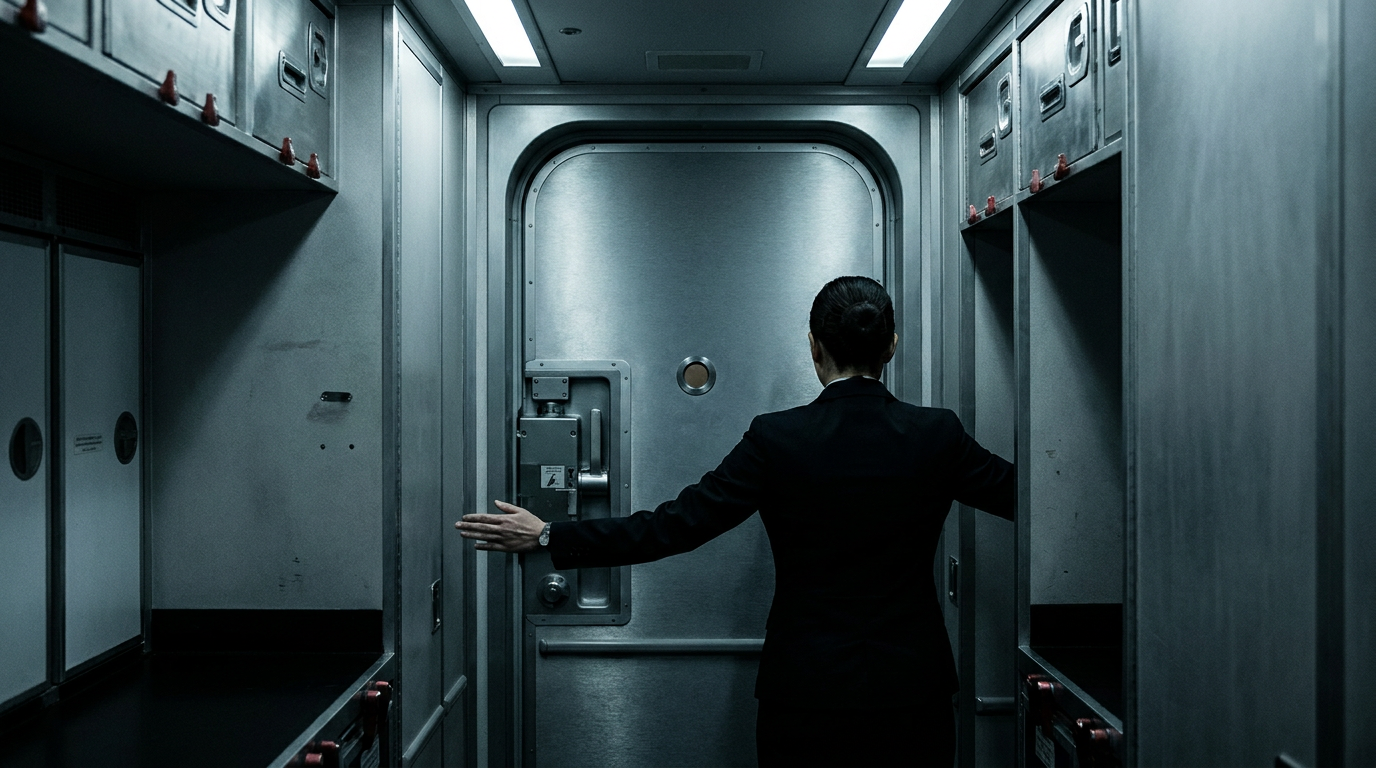
Two recent incidents on United Airlines flights document attempted cockpit breaches by unruly passengers. On a Chicago–Minneapolis route, a passenger attempted to storm the cockpit, resulting in flight diversion to Wisconsin. These incidents, while thwarted, underscore a continuing vulnerability in layered cockpit security: the human element. While aircraft are equipped with reinforced doors and electromechanical locks, the procedural and training defenses against forced access and social engineering remain uneven across the industry.
Incident Context
According to operational incident reports, the United Airlines flights involved passengers who became disruptive and made determined attempts to enter the flight deck. In at least one case, the aircraft was diverted to an unscheduled landing in Wisconsin, incurring crew fatigue, passenger delays, and operational cost. The passenger was apprehended and removed; no injuries or aircraft compromise resulted. However, the incident sequence—initial disruption, escalation to physical approach of the cockpit, crew response, and diversion—reveals procedural and training questions.
Root Causes and Risk Factors
Delayed Recognition and Intervention
In many cockpit-breach incidents, crew and cabin personnel do not detect the early signs of passenger agitation or do not escalate appropriately:
- Flight attendants may hesitate to call for assistance or notify the flight deck due to workload, unclear protocols, or concern about escalating the situation.
- Passengers seated near the cockpit may not understand why a disruption is a security concern, leading to delayed crew response.
- Crew coordination between flight deck and cabin is sometimes reactive rather than proactive; cabin crew may not have a clear trigger for alerting the flight deck.
Access Control and Procedural Gaps
Even with reinforced cockpit doors, vulnerabilities exist:
- Door opening for crew transition. Pilots and flight attendants must occasionally open the cockpit door to use the galley or lavatory. During these windows, an aggressive passenger can move toward the flight deck.
- Social engineering. Passengers may claim an emergency, medical condition, or need to speak to the captain. Crew must balance duty to assist with security; conflating medical need with a potential threat is difficult in real time.
- Inconsistent security briefing. Not all crew members understand the cockpit-access policy uniformly; some may defer to passenger requests rather than enforcing protocol.
Crew Training and Situational Awareness
Many airlines conduct annual security training on cockpit-door procedures, but the training is often generic, compliance-focused, and does not include scenario-based practice:
- Cabin crew may not be trained on recognizing early signs of passenger escalation (increasing agitation, approaches to the galley/cockpit area, repeated requests to enter the flight deck).
- Pilots may not practice coordinated responses with cabin crew in a realistic scenario; the assumption is that the door will hold, not that crew coordination is essential.
- Ground and dispatch staff are sometimes not looped into security incidents until after the fact, missing the opportunity to reroute or coordinate support.
Operational and Security Implications
Insider Threat Dimension
Cockpit-door policy was designed to prevent external airborne hijacking. However, the policy is also exposed to insider threat: a crew member (pilot, flight attendant, or airline employee with access) could facilitate breach or ignore protocol. Recent incidents do not indicate crew complicity, but the control structures—physical barriers, procedural protocols, and training—are designed assuming adversarial separation between cabin and flight deck. An employee or crew member acting in bad faith can circumvent these controls.
Airlines should:
- Conduct background screening and vetting for all flight crew and personnel with cockpit-area access.
- Implement a "two-person rule" for door openings: a flight attendant must observe any crew member or passenger approaching the flight deck.
- Establish a reporting mechanism for crew concerns about colleague behavior or policy non-compliance; anonymous reporting should be available.
Unruly Passenger Escalation
Alcohol, fatigue, medical conditions, and psychological distress are common triggers for unruly behavior. Once a passenger becomes disruptive, escalation to physical approach of the cockpit is possible:
- Early intervention is critical. Cabin crew should be empowered and trained to address disruption before it escalates (moving the passenger, offering assistance, coordinating with ground support).
- Crew authority and legal framework. Cabin crew must understand their authority to restrain, isolate, or divert a passenger, and must know the legal framework (FAA regulations, company policy, local law) governing crew action.
- Post-incident reporting. Airlines must document and review all incidents to identify patterns (alcohol involvement, mental health, medical emergency) and to adjust pre-flight screening or policy.
Industry Response and Best Practice
Policy Review
Airlines should conduct a security posture assessment focused on:
- Cockpit-door protocol: Is the protocol clear, unambiguous, and uniformly understood by all crew? Does it account for emergency medical access? Are there loopholes (e.g., door opening for crew breaks)?
- Crew coordination: Is there a clear escalation and communication path from cabin crew to flight deck? Do crew conduct regular briefings or drills?
- Ground support: Are dispatch, security, and flight operations informed of in-flight incidents in real time? Can they provide guidance to crew or coordinate emergency services?
Training and Awareness
Beyond annual compliance training, airlines should:
- Conduct scenario-based drills with flight crews (pilots and cabin crew together) practicing recognition and response to early passenger disruption, escalation, and cockpit-breach attempts.
- Include conflict de-escalation and restraint training for cabin crew, with clear guidance on when to escalate to crew coordination or restrain a passenger.
- Provide cultural messaging that cockpit security is non-negotiable and that crew members who allow breaches—or fail to report policy non-compliance—face disciplinary consequences.
Reporting and Intelligence
- Standardize incident reporting. All unruly-passenger incidents, especially those involving cockpit-area approach, must be reported to the airline's security team and flagged to TSA and FAA.
- Share intelligence across carriers. Through IATA and airline security consortia, carriers should share information on high-risk passengers or patterns (e.g., specific routes, times, or airports with elevated incident rates).
- Integrate with ground security. Coordination between airline security, airport security, and local law enforcement can improve pre-flight identification of high-risk passengers and post-incident apprehension.
What to Watch
- Trends in unruly behavior. If incidents increase (frequency, severity, or cockpit-breach attempts), this may reflect changing passenger behavior (alcohol policy changes, post-pandemic norms, economic stress) requiring system-wide response.
- Regulatory changes. FAA and TSA may issue new guidance on cockpit-door policy, crew training, or passenger screening; airlines should monitor and implement proactively.
- Technology upgrades. New cockpit-door systems (e.g., remote-locking mechanisms, additional monitoring) may be mandated or incentivized; early adoption strengthens security posture and reduces liability.
Key Takeaways
- Recent cockpit-breach attempts reflect a persistent vulnerability in crew training and procedural compliance, not a failure of the physical cockpit door itself.
- Early recognition and de-escalation by cabin crew are critical. Airlines should invest in scenario training and empower crew to intervene before a passenger reaches the flight deck.
- Insider threat remains a latent risk. Background vetting, two-person rule for door access, and reporting mechanisms should be reviewed and reinforced.
- Unruly-passenger incidents are rising across the industry; airlines should benchmark their incident rates and response times against peers and against regulatory expectations.
- Post-incident coordination with ground security, TSA, and law enforcement improves outcomes. Establish a clear escalation and communication protocol from flight deck to dispatch to ground security.
- Crew culture and accountability matter. Messaging that cockpit security is non-negotiable and that policy non-compliance carries consequences is essential.
Frequently asked questions
Are reinforced cockpit doors enough to prevent a breach?
No. Recent attempted breaches reflect gaps in crew training and procedural compliance rather than door failure, and vulnerabilities remain during door openings for crew transitions and through social engineering.
What is the insider-threat dimension of cockpit security?
Cockpit-door policy assumes adversarial separation between cabin and flight deck, but a crew member or employee with access acting in bad faith can circumvent it. Background vetting, a two-person rule for door openings and confidential reporting reduce that exposure.
How can airlines reduce unruly-passenger cockpit-approach incidents?
Early recognition and de-escalation by cabin crew are critical. Airlines should run scenario-based drills, empower crew to intervene before a passenger reaches the flight deck, and standardise incident reporting to the TSA and FAA.